Landing
Project statement
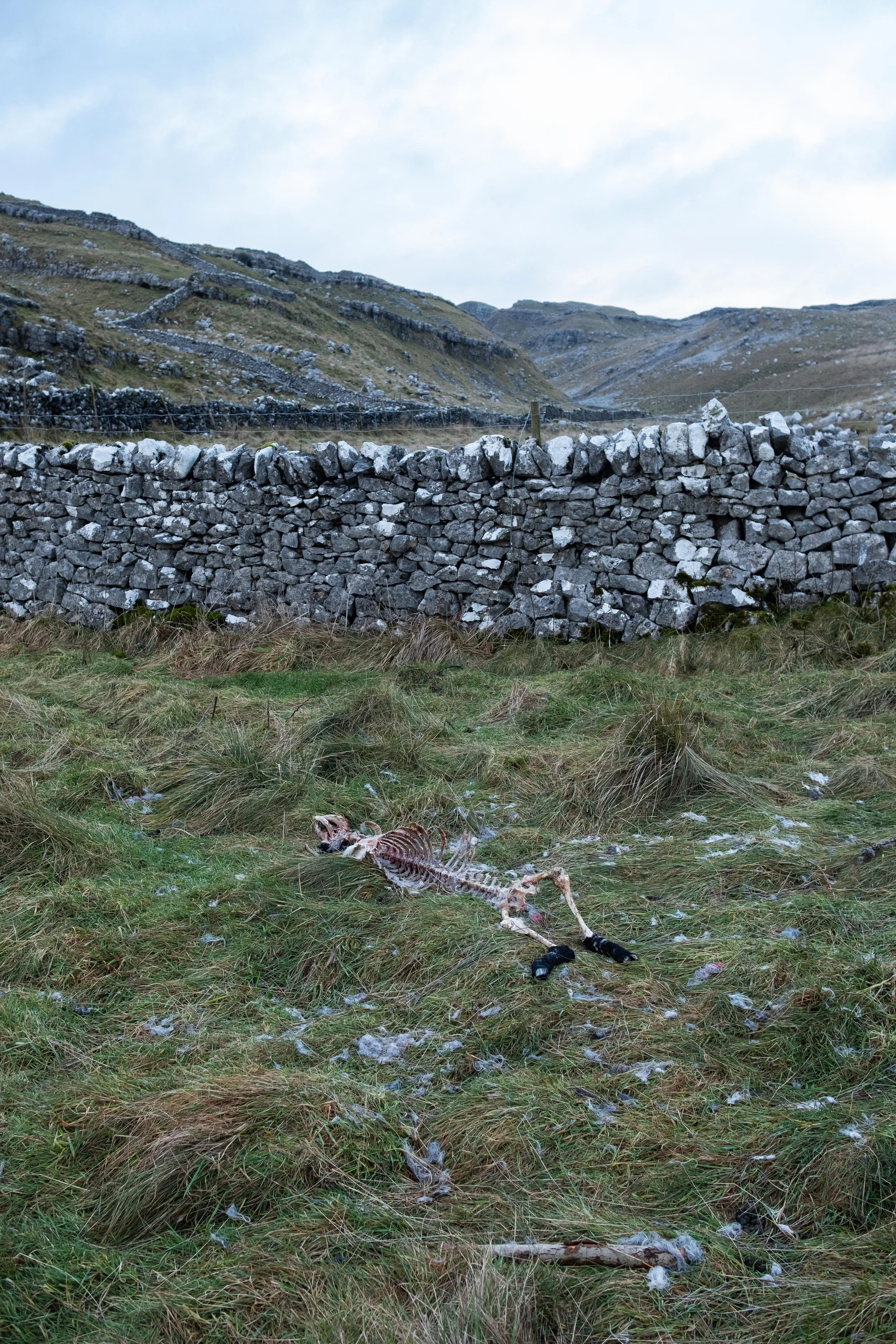
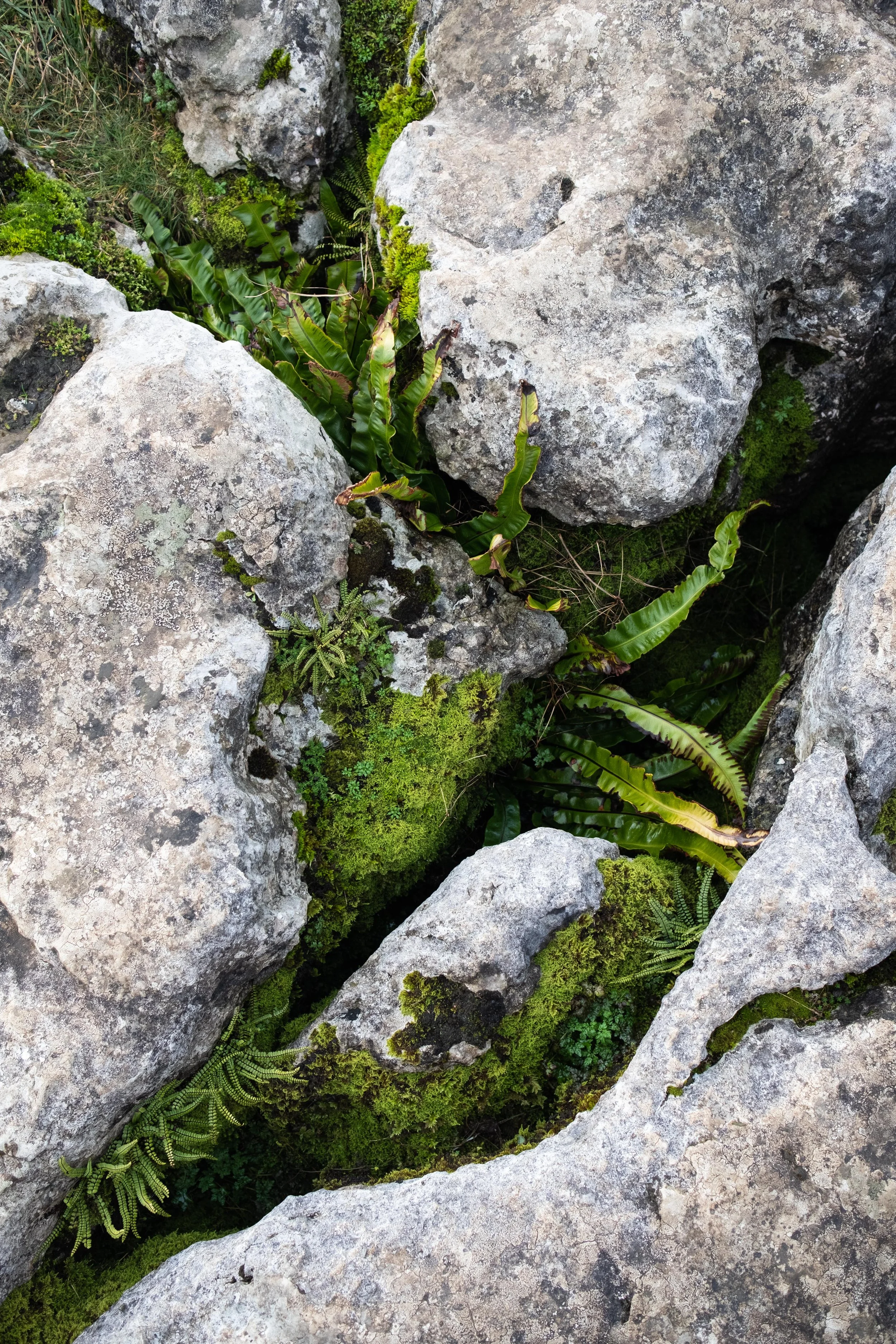
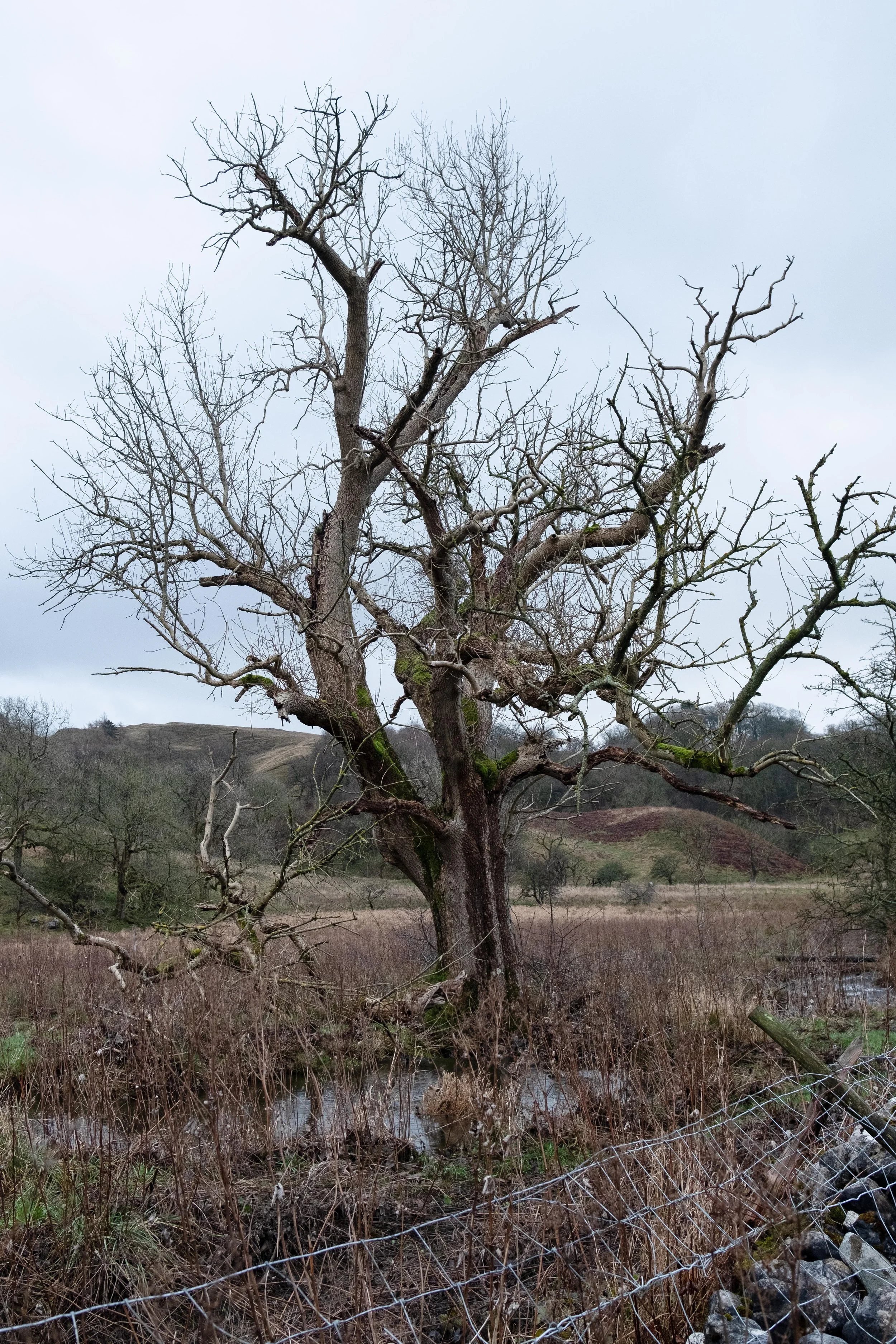
I realised that despite my passion for the outdoors and the environment, I didn’t know very much about the landscapes I had been spending so much time in. In a study of fourteen European countries, the UK ranked lowest for its levels of nature connectedness, our relationship with nature is failing. In response to this, Landing works to engage more actively with the landscape and all of the life, challenges and history that it carries. Through fostering a haptic, expanded conversation about the land and our experiences within it, Landing encourages a deeper sense of responsibility to know, and from this, develop care for the land, whether that be a local green space or a mountainside.
The project challenges traditional landscape photography and the many complexities in its seductive but often problematic nature. Much of traditional landscape portrays distant, idealised vistas, without showing the involvement of humanity, the contextual issues, or the deep ecologies and processes that make up the land. In Photography and Landscape, Rod Giblett and Juha Tolonenwrite that "the concept of landscape encodes, measures and reproduces the viewer’s alienation from nature. Landscape measures our distance from land” (Giblett, Tolonen, 2012). Derek Gladwin coins the term ‘eco-haptic’ as using “visual tactility to develop a deeper, abiding relationship with the environment, resulting in a greater capacity for empathy and responsibility” (Gladwin, 2013). Influenced by these ideas, Landing shares stories of moving through and engaging with the land up close, printed on zines made from agricultural waste. Landing’s experimental approach works to explore the dynamic and intersectional layers within the environment and our relationship to it, navigating away from landscape and to the land itself.
Over the course of developing this body of work, I was privileged to experience and document walks and climbs at many different rural locations, either with the university mountaineering club, or my partner, Dylan. The four resulting zines focus on four specific places - Silverdale, Malham, Great Langdale and Chwarel Dinorwig. These zines act as a resource, a discussion, a story and a guide to encourage a closer relationship with the land and all the life that it carries, including ourselves.
Look closely, listen and be curious, so that we can all be better placed to know and respond to the challenges that the land, and therefore we, may face.
Giblett, R., Tolonen, J. (2012) Photography and Landscape. UK: Intellect.
Gladwin, D. (2013) ‘Eco-Haptic Photography: Visualizing Irish Bogland in Rachel Giese’s The Donegal Pictures’, Photography and Culture, Vol. 6 - Issue 2, pp.157-174.
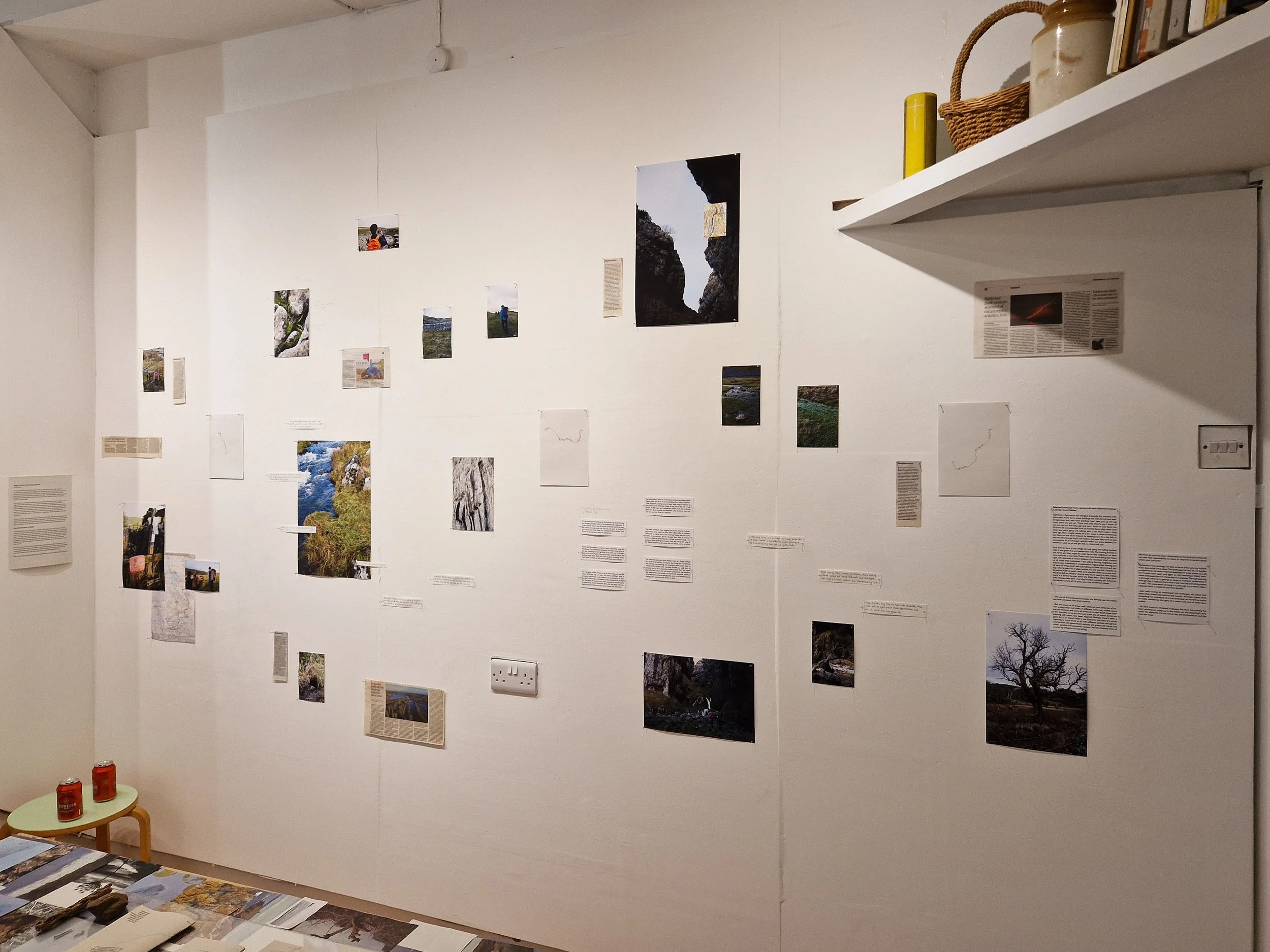
Work-in-progress exhibition
PR1 Gallery, Preston
April 2025


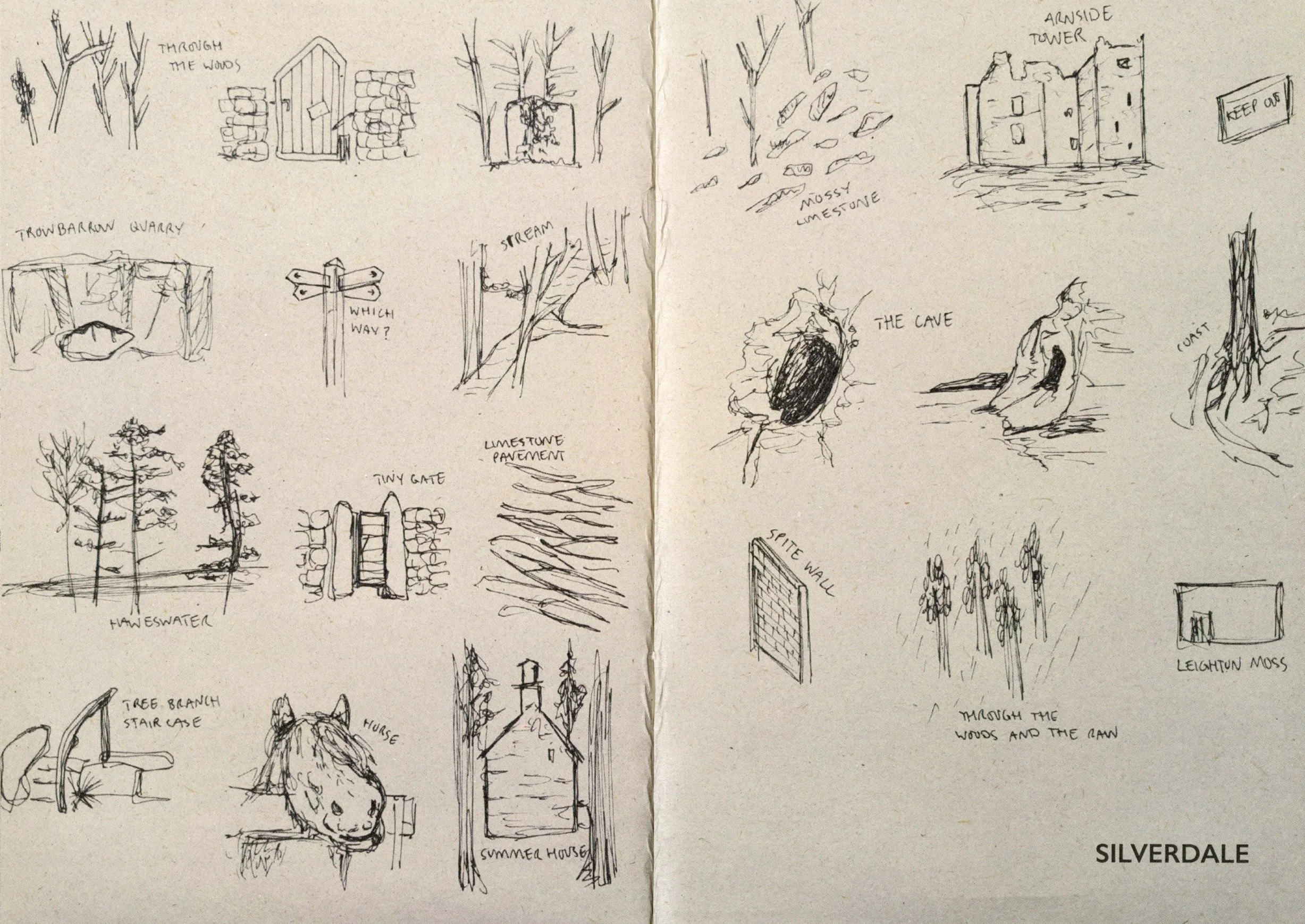
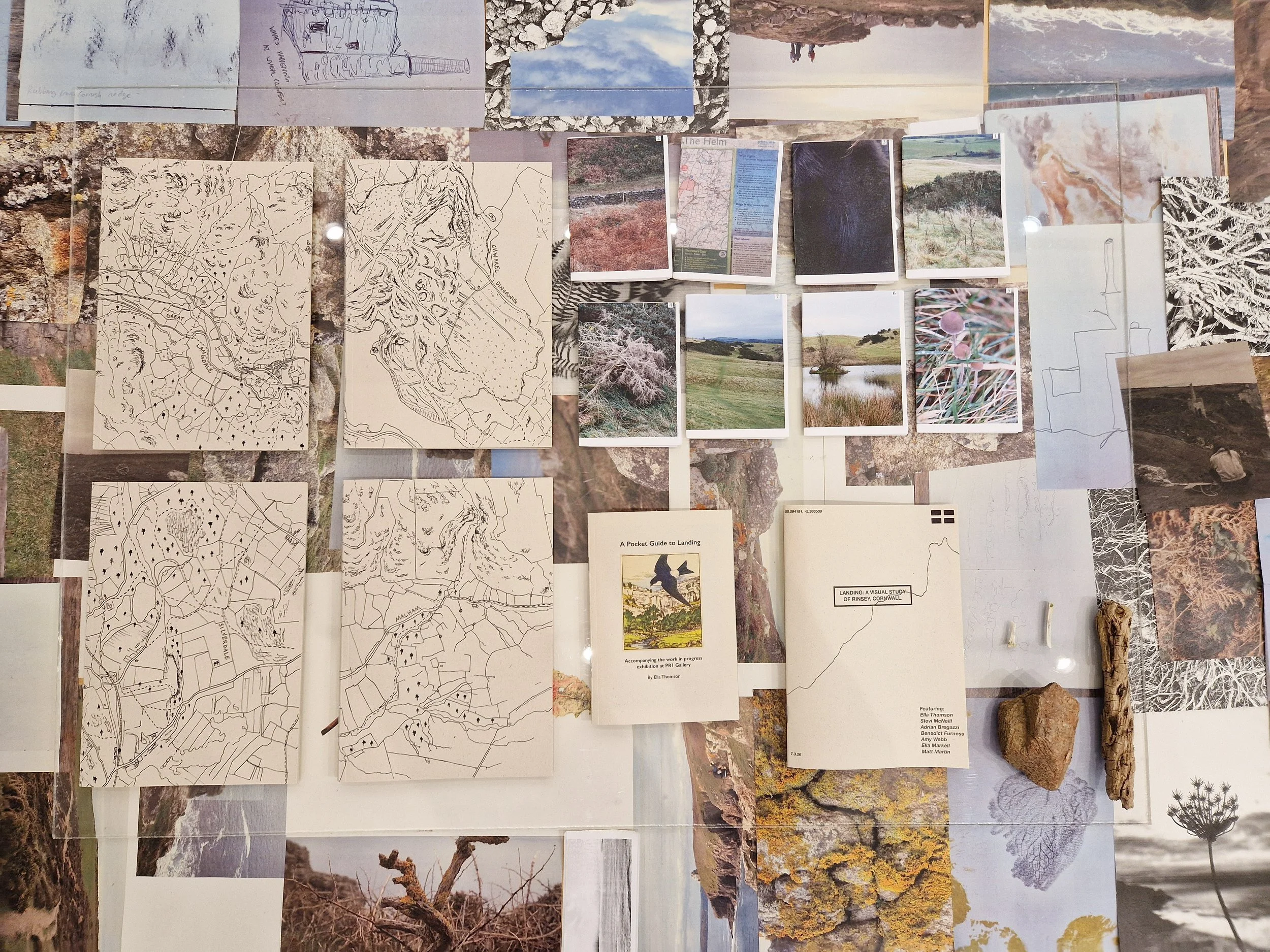
To accompany the research-based display on the wall, I also made a small A6 zine, A Pocket Guide to Landing, which presented the wider project and process of making the exhibition. The zine was printed by PRINT.WORK in Leeds, on Oribi Straw, a natural paper made from 100% recycled agricultural waste (products from crop farming which would otherwise be burnt).




The Zines
The result of this project is four zines, each one an experience and exploration of a different place - Silverdale, Malham, Great Langdale and Chwarel Dinorwig.
All four zines have a free PDF scan available via the PDF links below. Once opened, click the download icon for higher quality viewing/download options.
Exhibition at SHOP
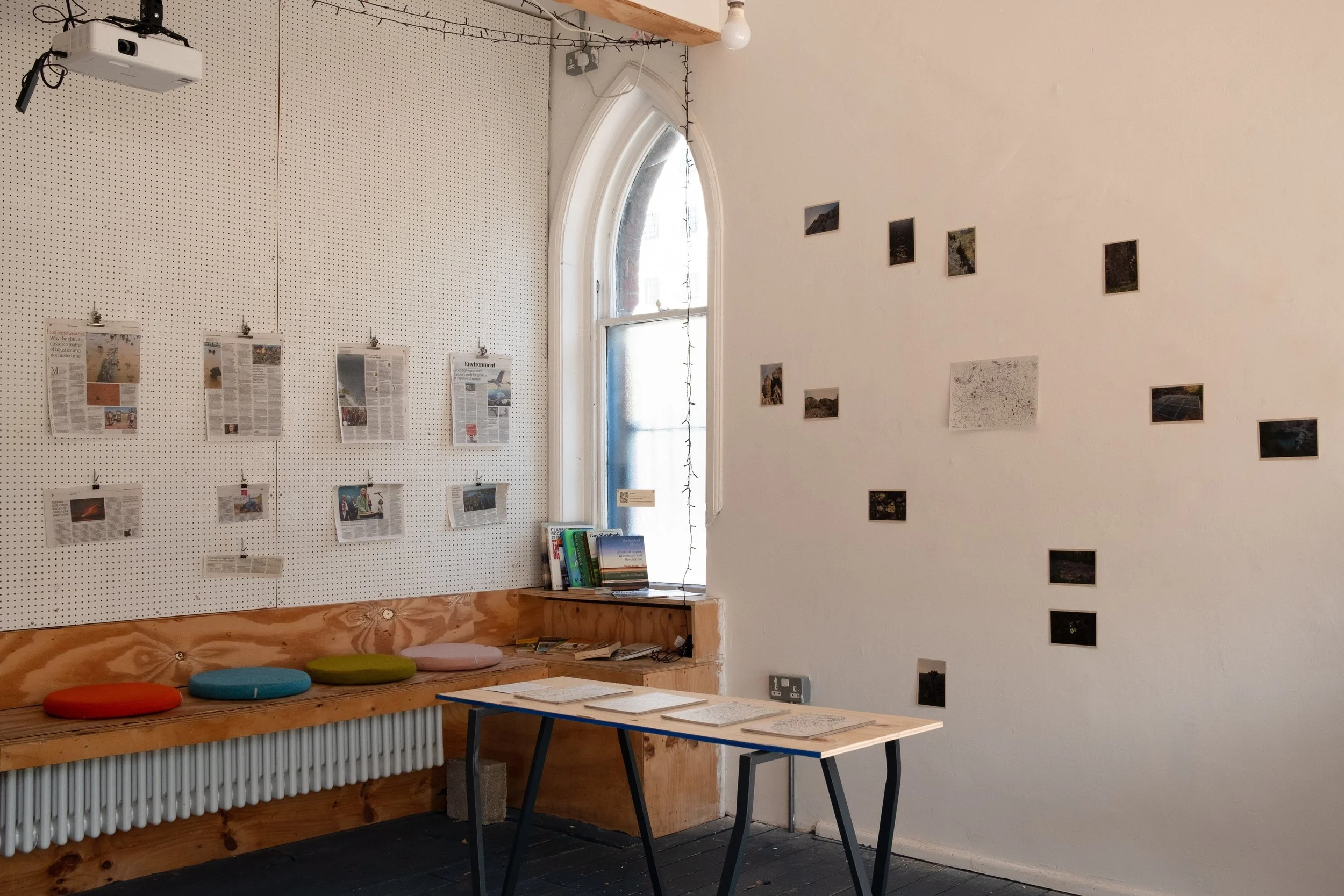
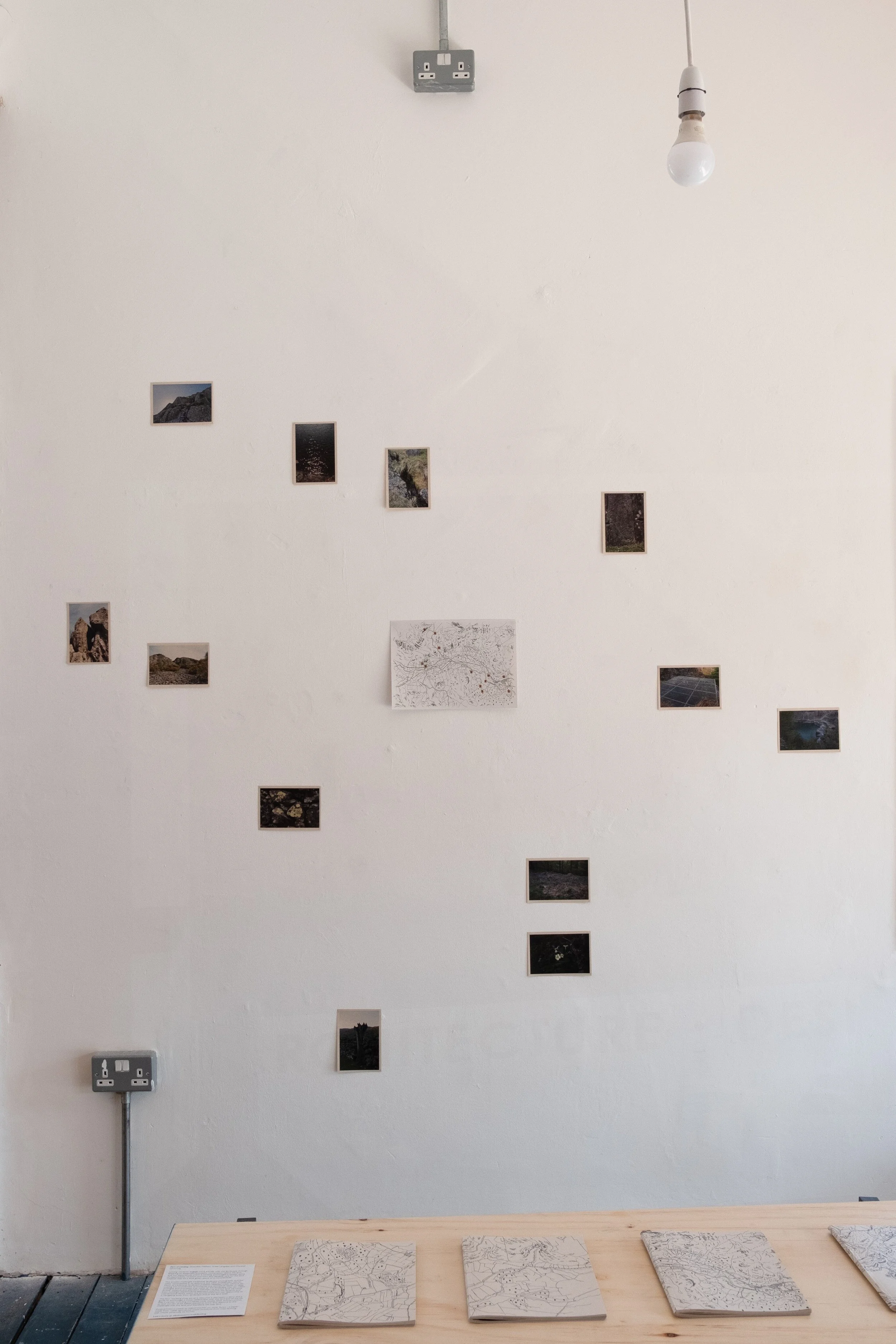
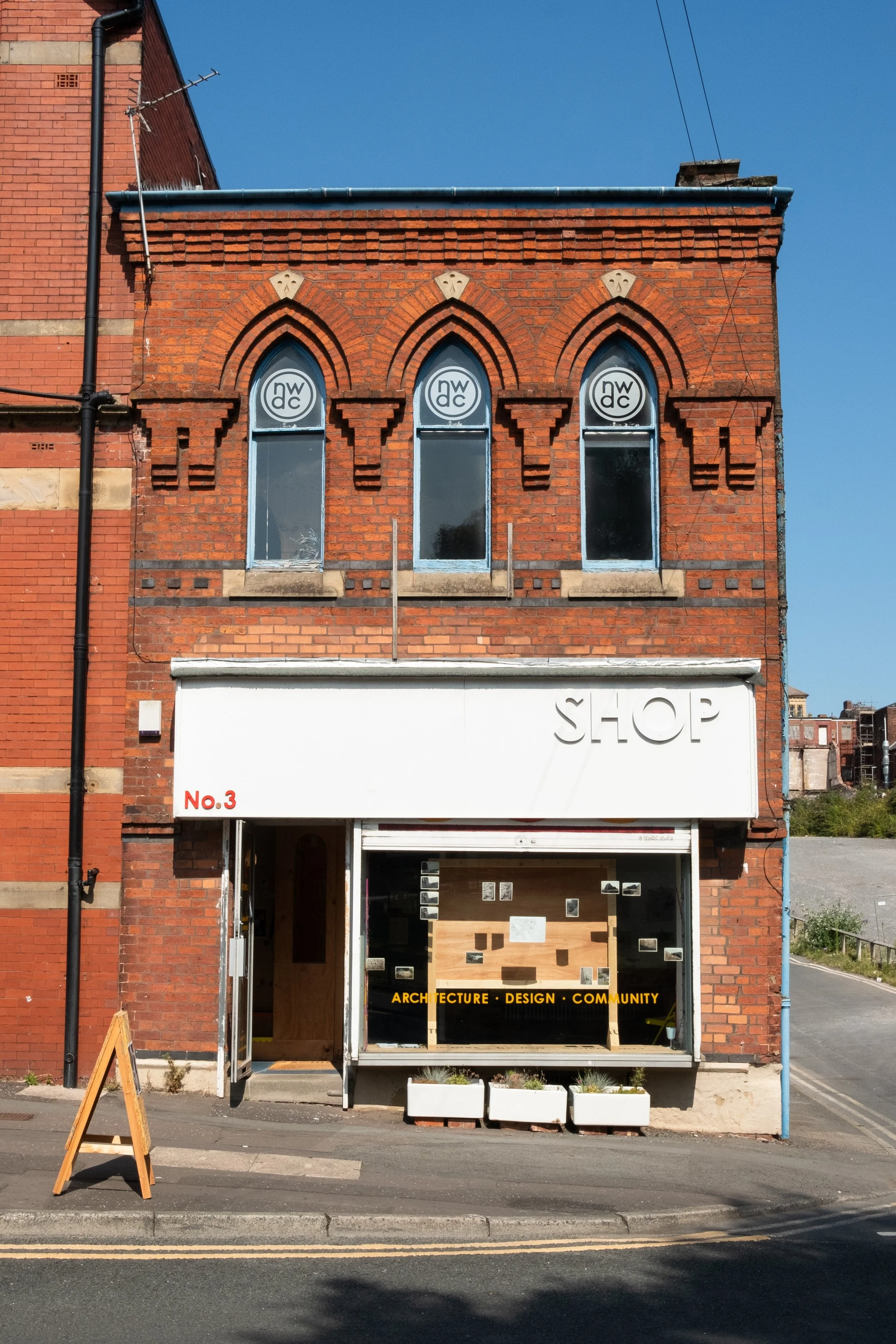
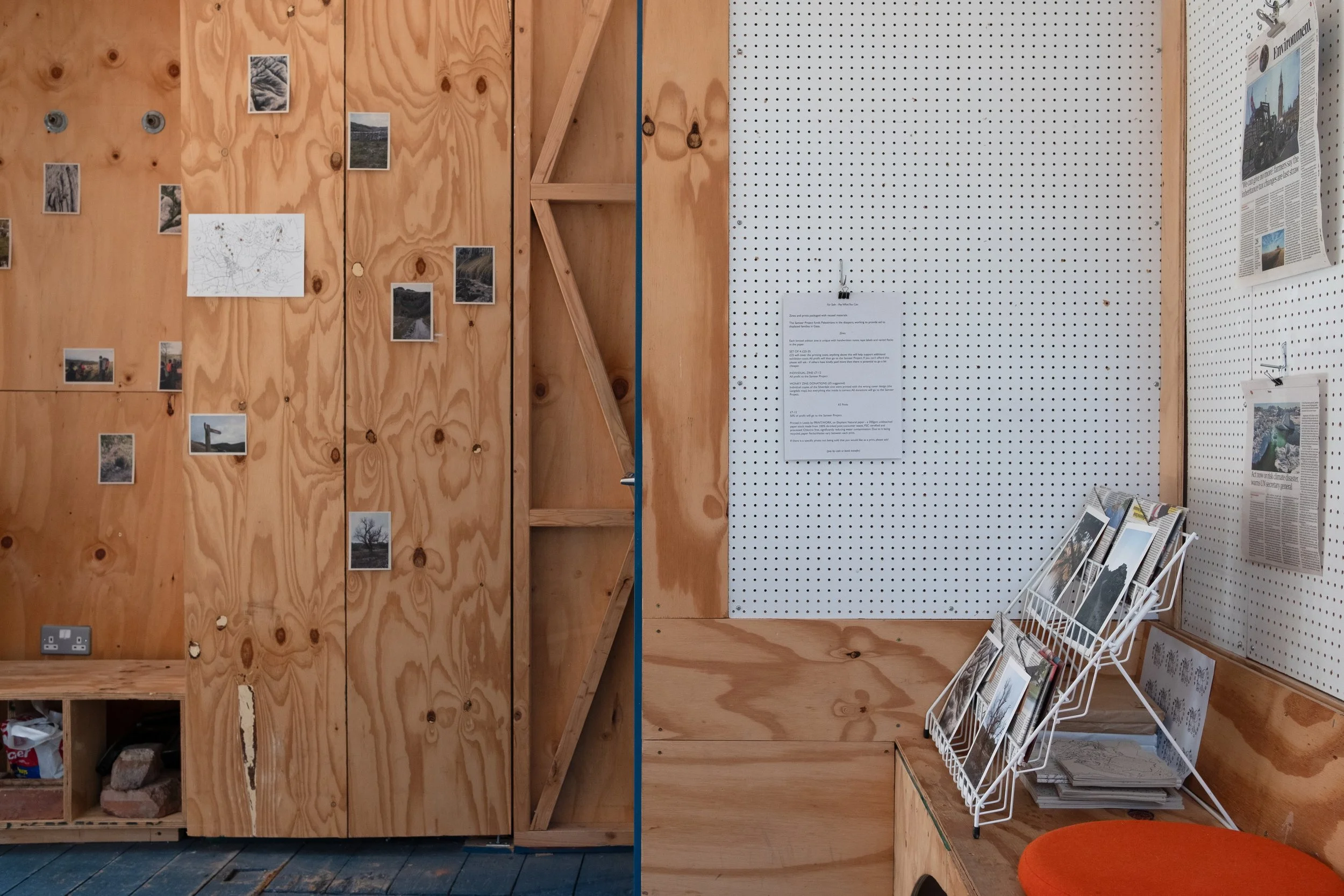
Landing was exhibited at SHOP Preston CIC, August 2025.









The environmental impact of the zines and exhibition
Photography and the process of making work often uses many different materials and resources, which can create large amounts of environmental pollution and waste. As this project developed over the last few months, I became very conscious of the materials used and the ‘footprint’ created. I tried to reduce this as much as I could and be really mindful of the methods used. I mainly focused on the paper/materials used and the waste created from this, but there are still many improvements to make as my practice develops and I learn more. I think it is really important to be transparent about our processes/materials, so we can learn and share knowledge along the way.
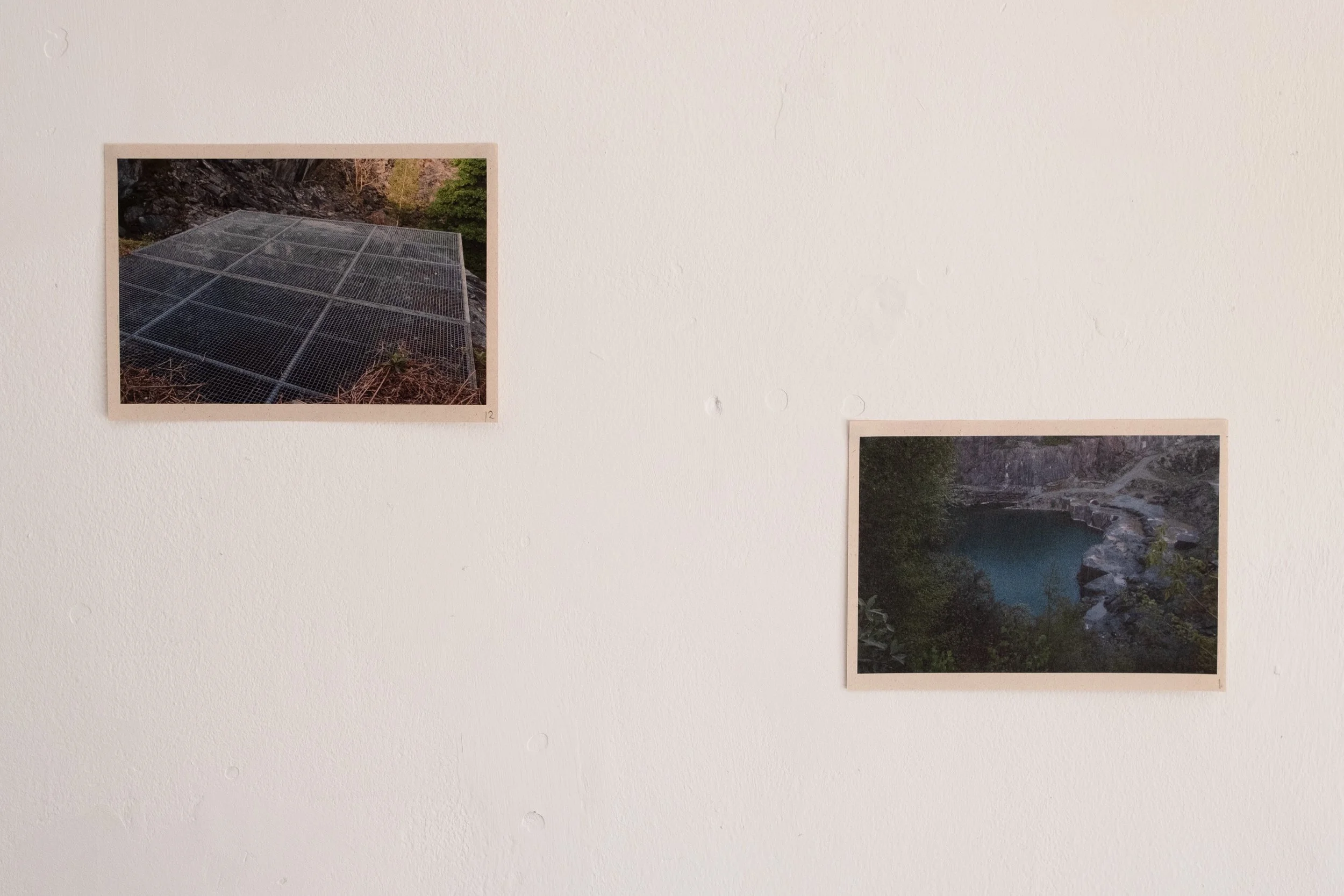
The zines were printed and bound in Leeds by PRINT.WORK, on Oribi Straw - a paper made from 100% agricultural waste (products from crop farming which would otherwise be burnt). The photographs on the wall at SHOP, as well as the exhibition texts, were also printed on this paper. The tape used inside the zines and during most of the development period is plastic-free and recyclable.
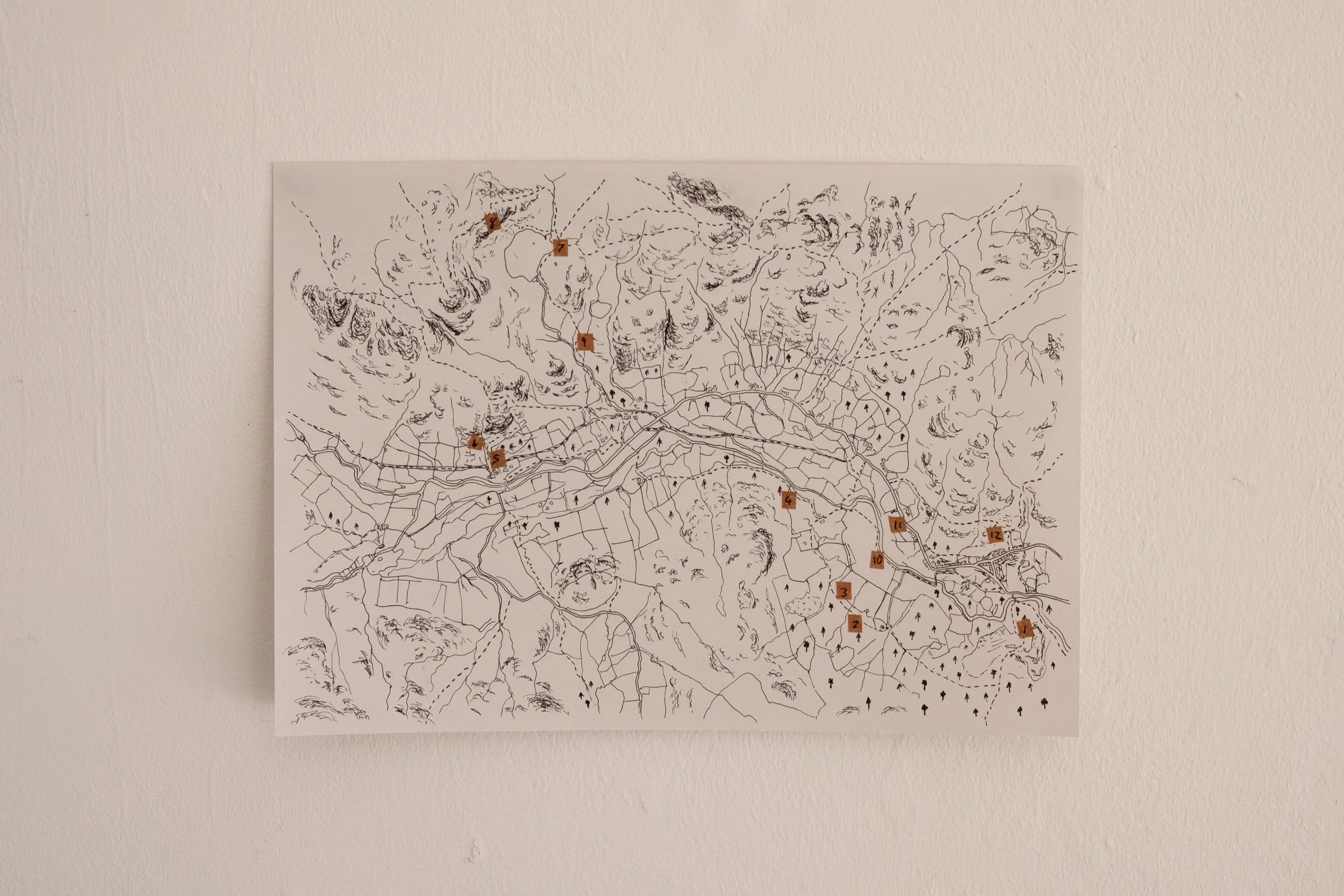
I printed mock-ups and tests at the library near my flat, mostly using paper created from 100% recycled post-consumer waste, made in Spain and distributed by Eco-Craft in Lancashire. The maps on the wall were also drawn onto this paper. For the zine sleeves and additional text inserts, I reused the mock-up sheets and printed on the other side of them.
The exhibition industry can have a significant environmental impact, from the various materials, waste and emissions created during the many stages of exhibiting, such as the artwork production, shipping, packaging, travel, installation and display methods used.
To minimise the waste and resources used for this small and short exhibition, I didn’t frame anything and used Blu Tack to attach the prints to the wall and window, as the Blu Tack and prints can then both be easily reused. I used the pegs, clips, furniture and pinboard already kept in SHOP. Exhibiting at SHOP, a local CIC space, has cut out the resources used in the artwork transport/artist travel process. I walked over with everything lightly packaged in reused and recyclable materials. The prints for sale were also packaged with reused newspaper and cardboard, with 50% of profits from any zine or print sale going to The Sameer Project North Gaza campaign.
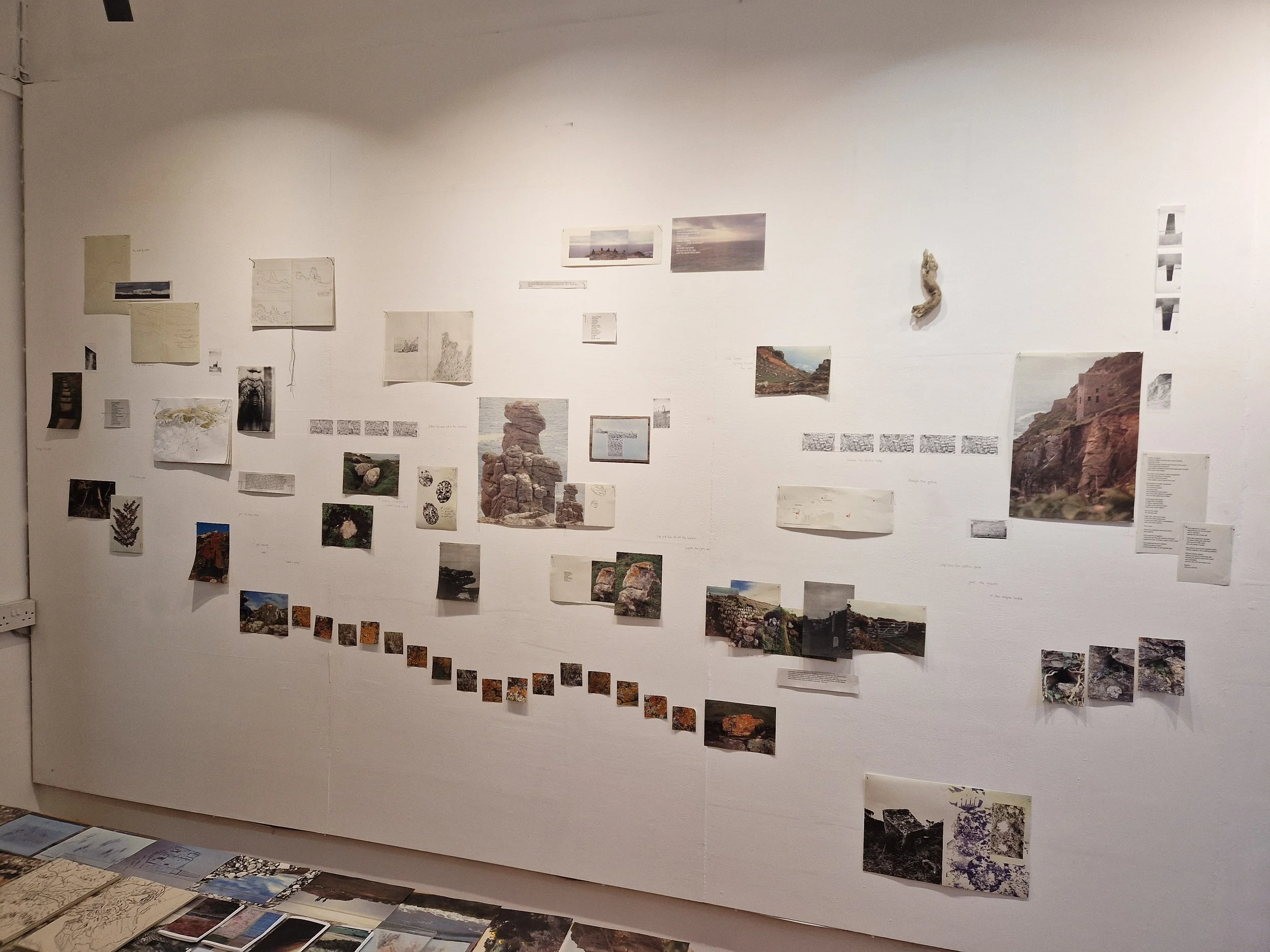
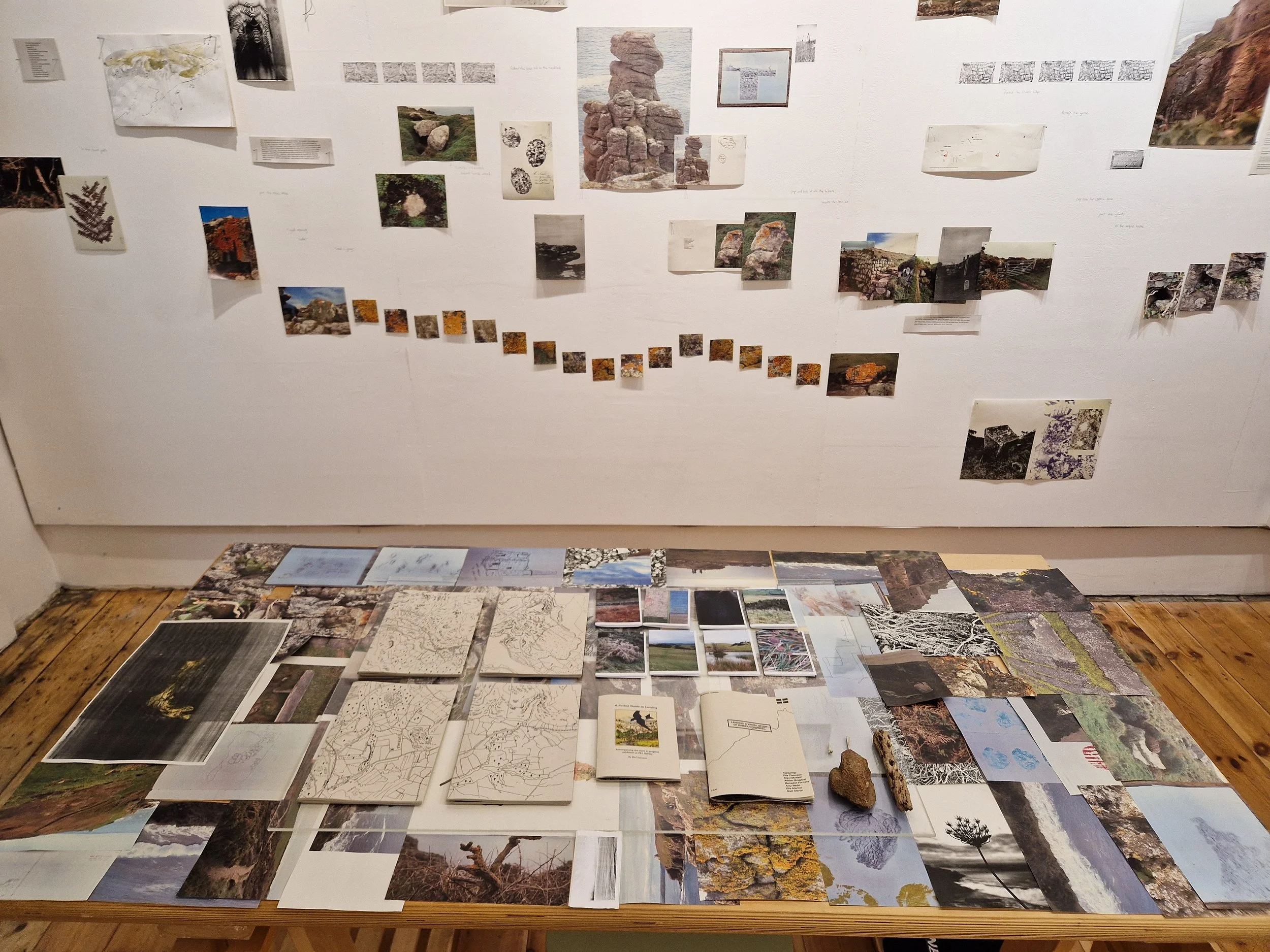
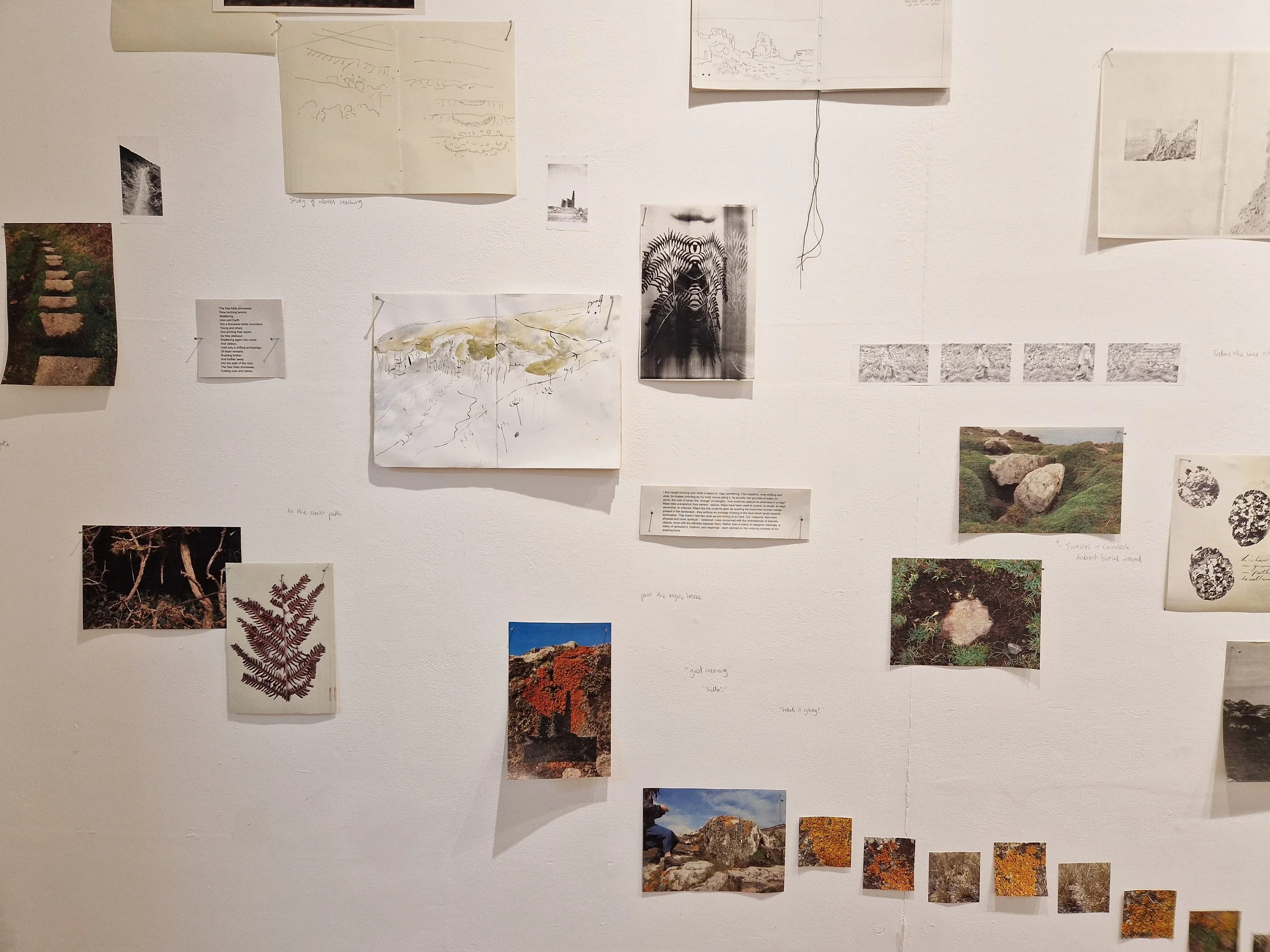
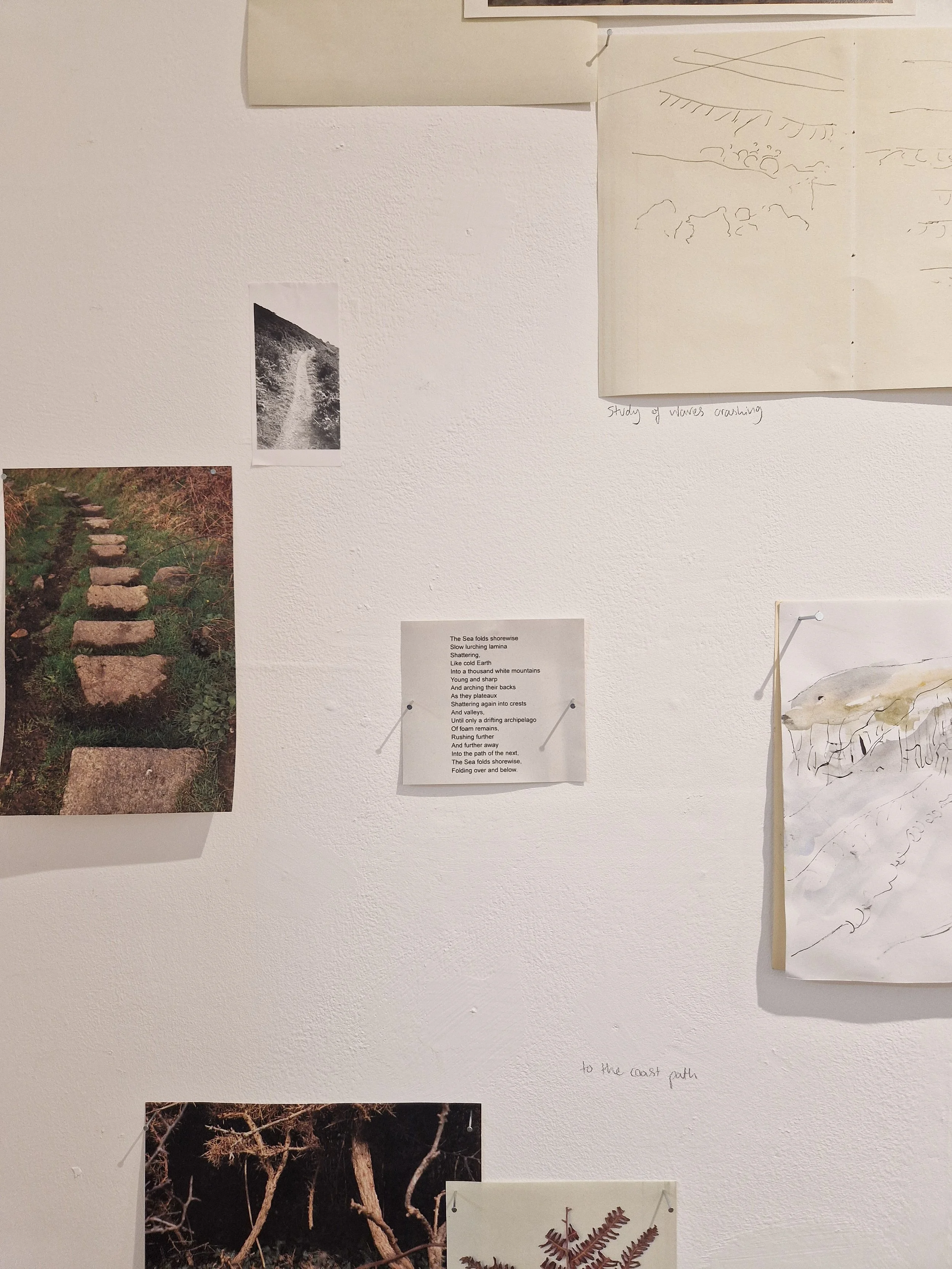
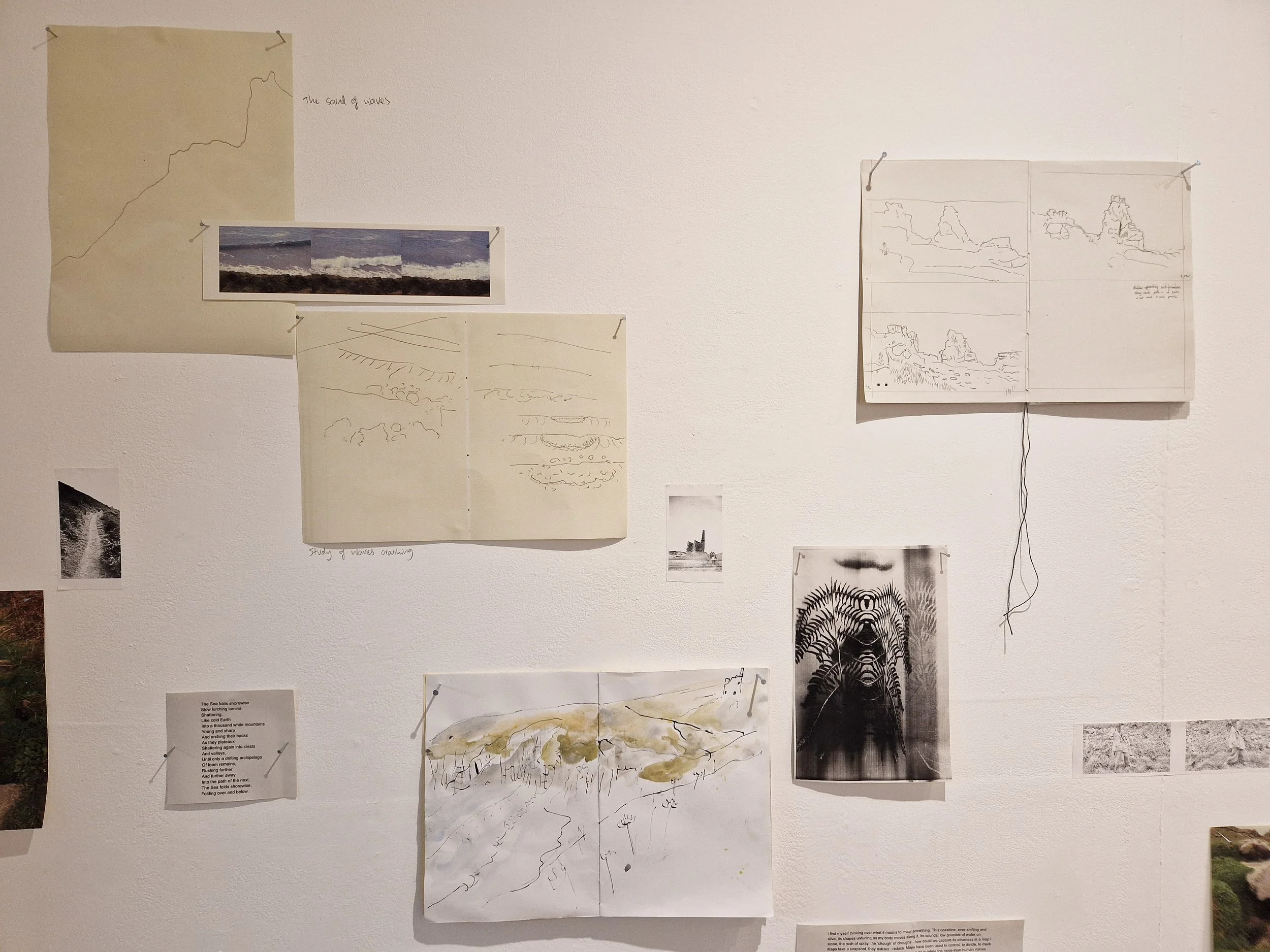
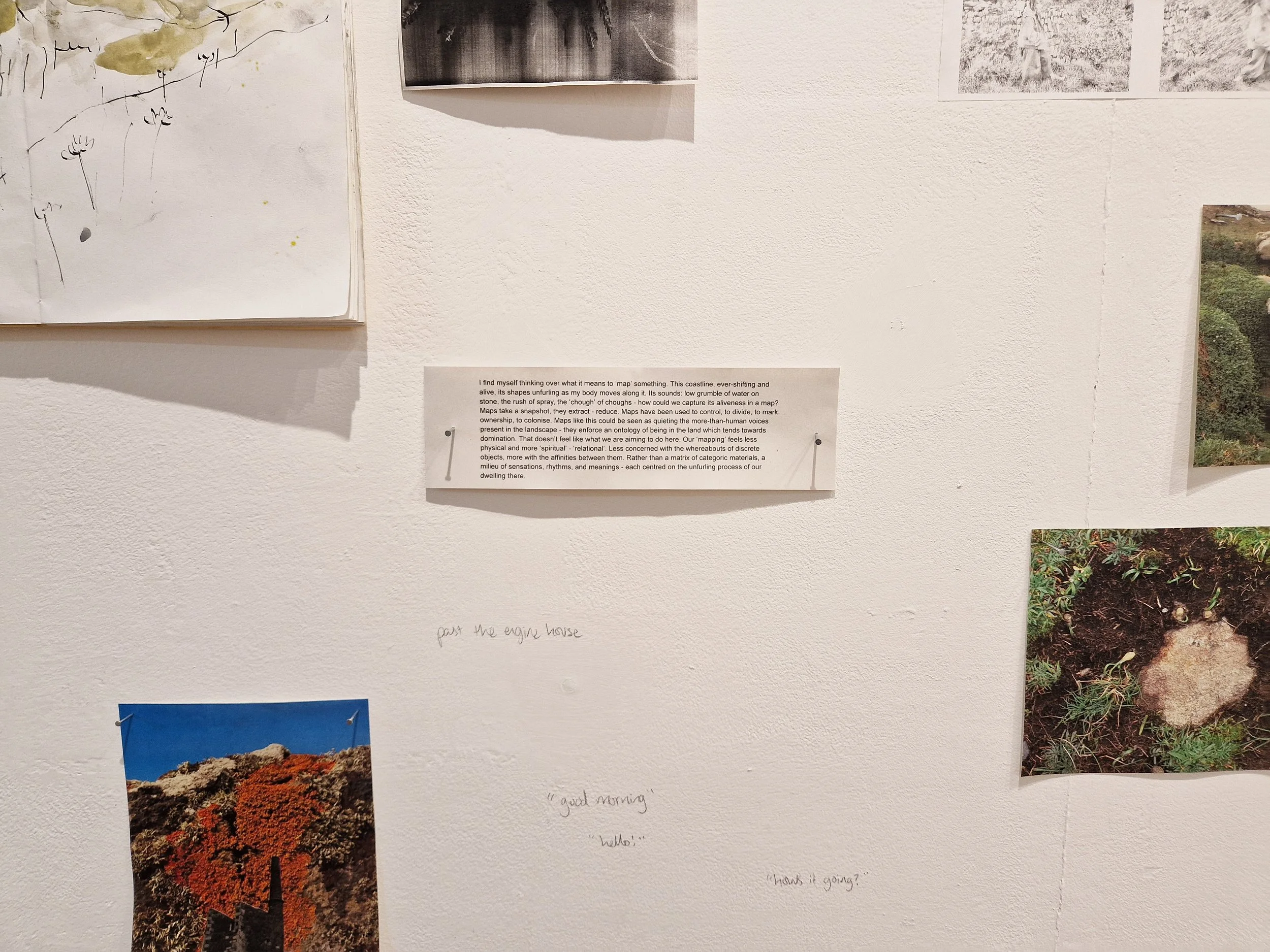
Exhibition + Workshop at TONER
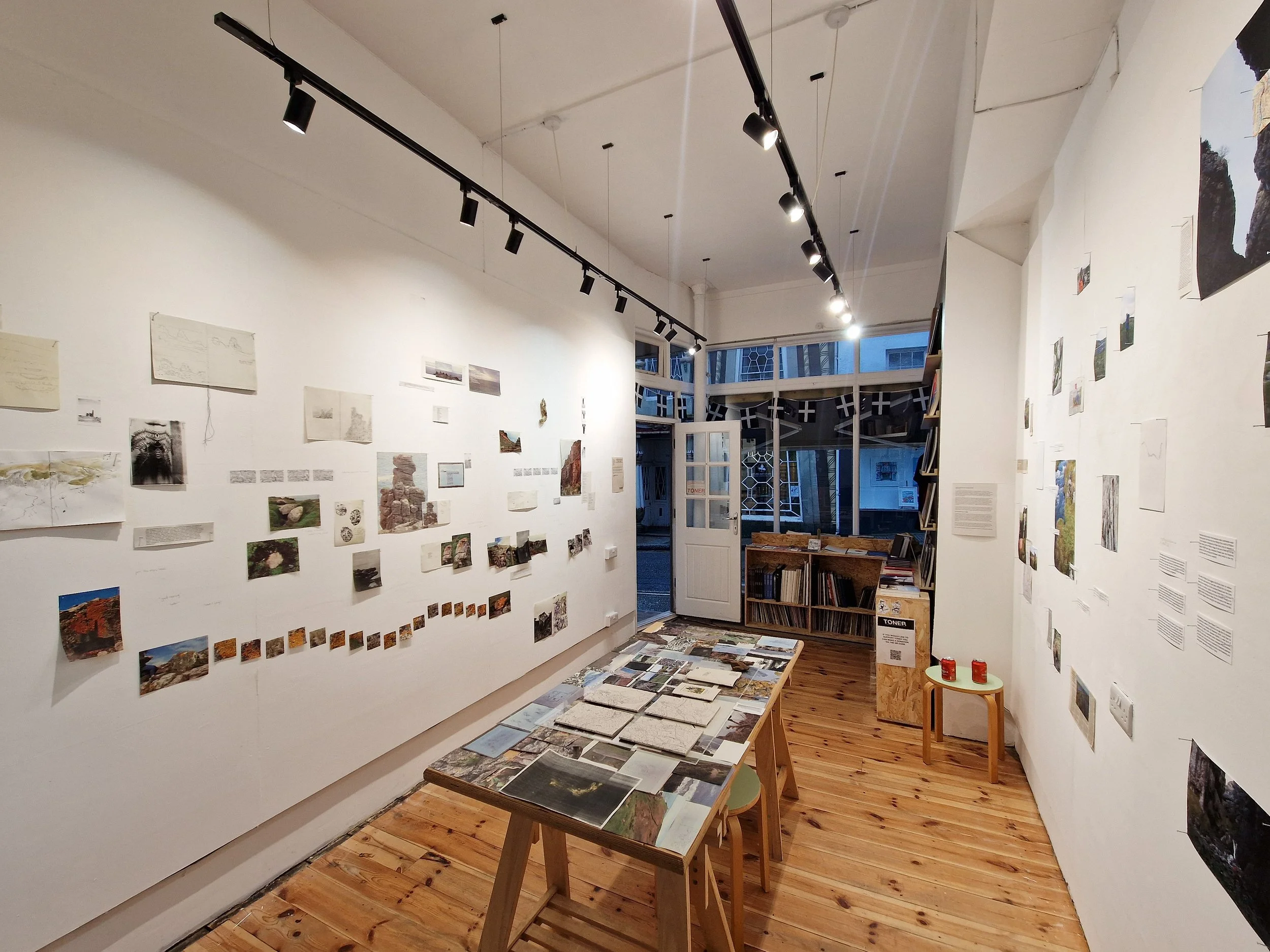
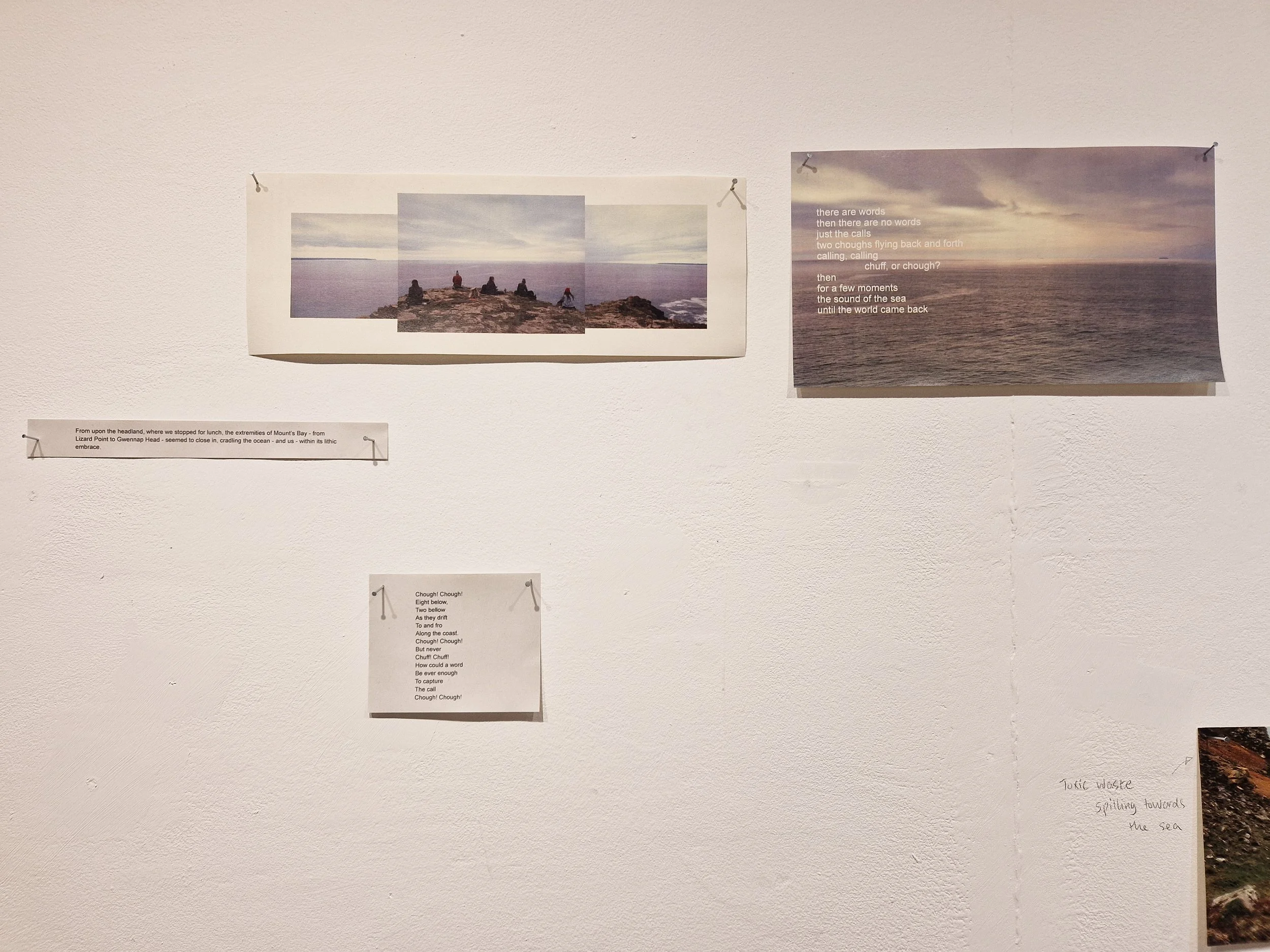
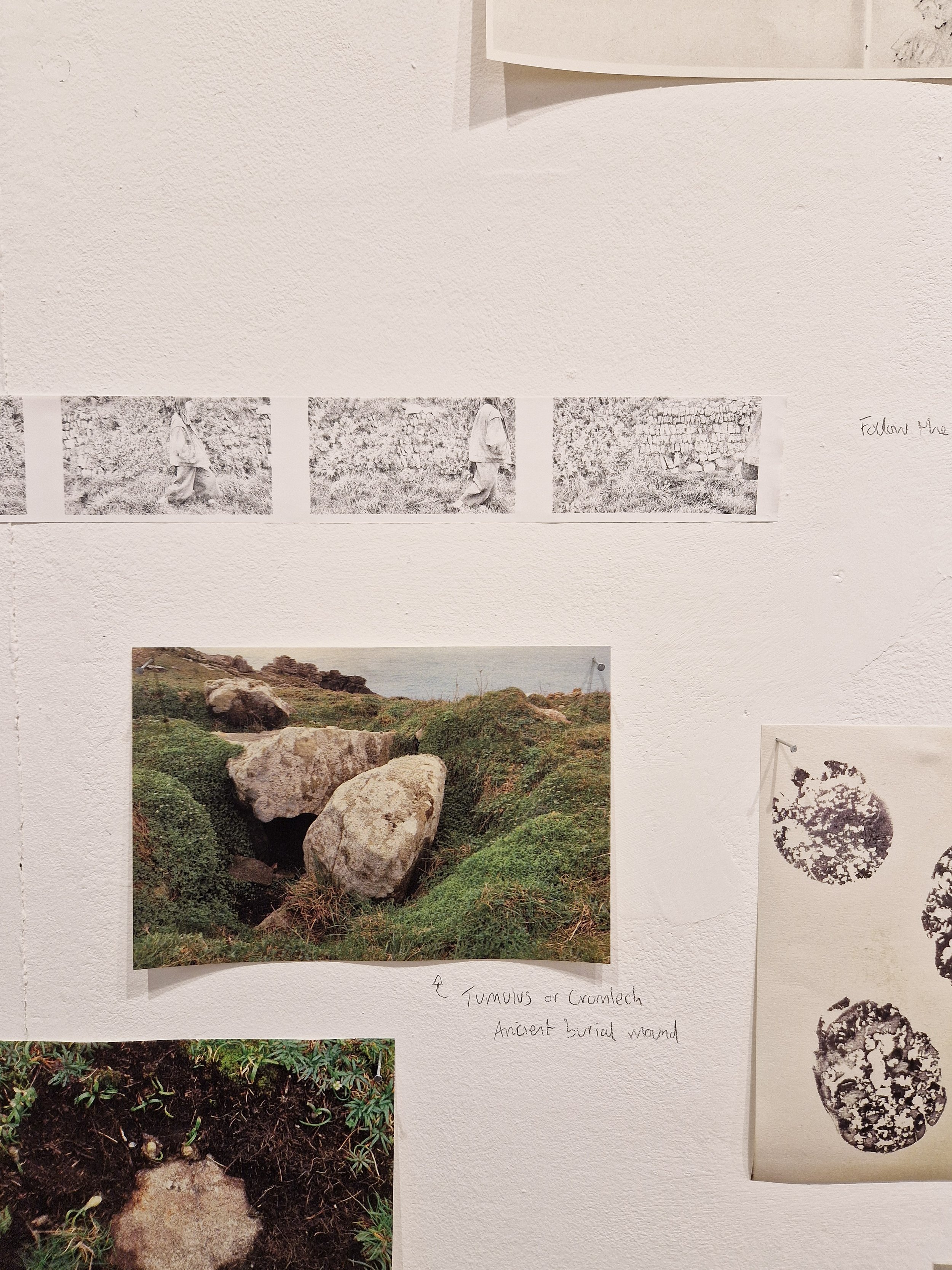
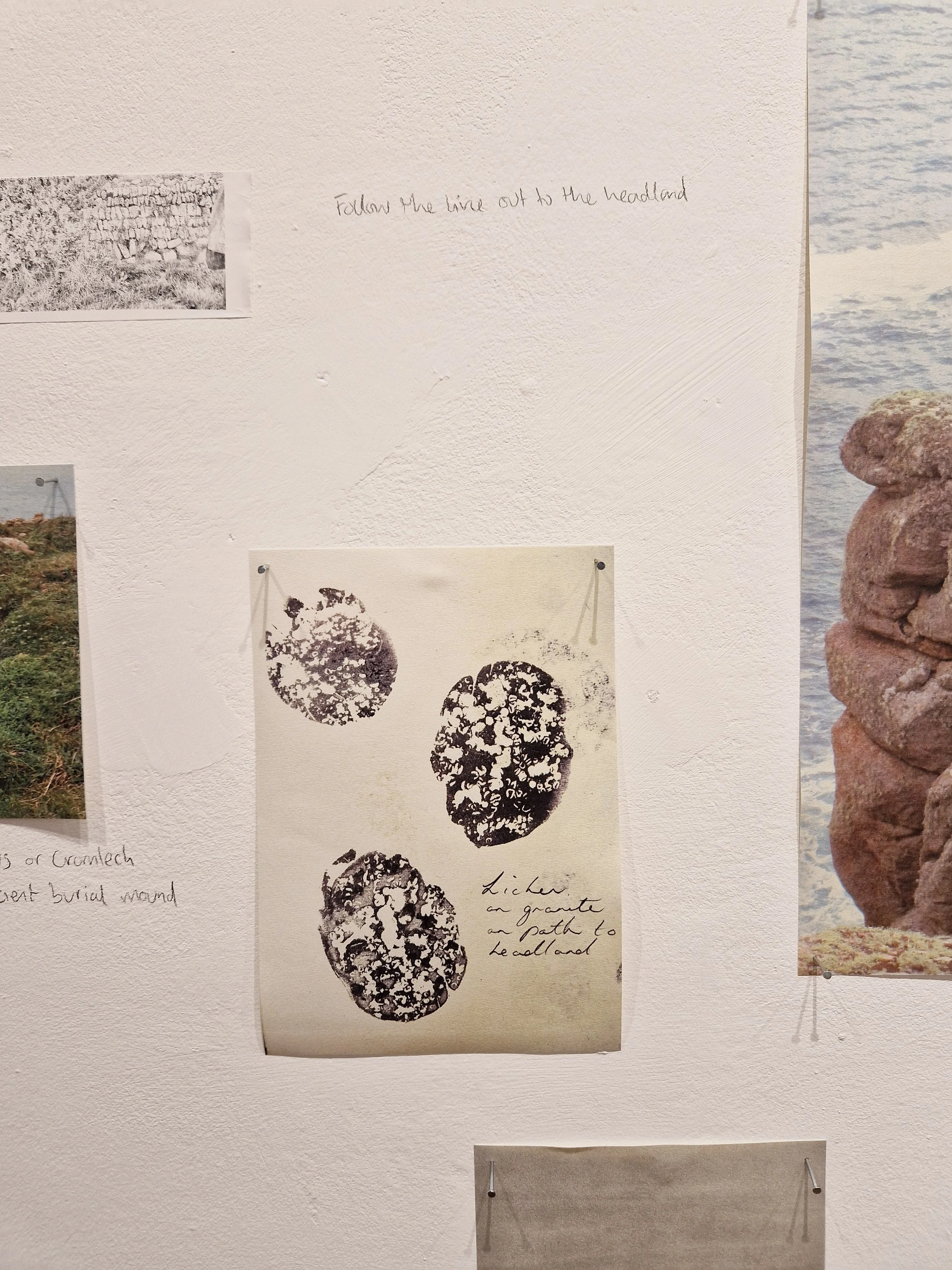
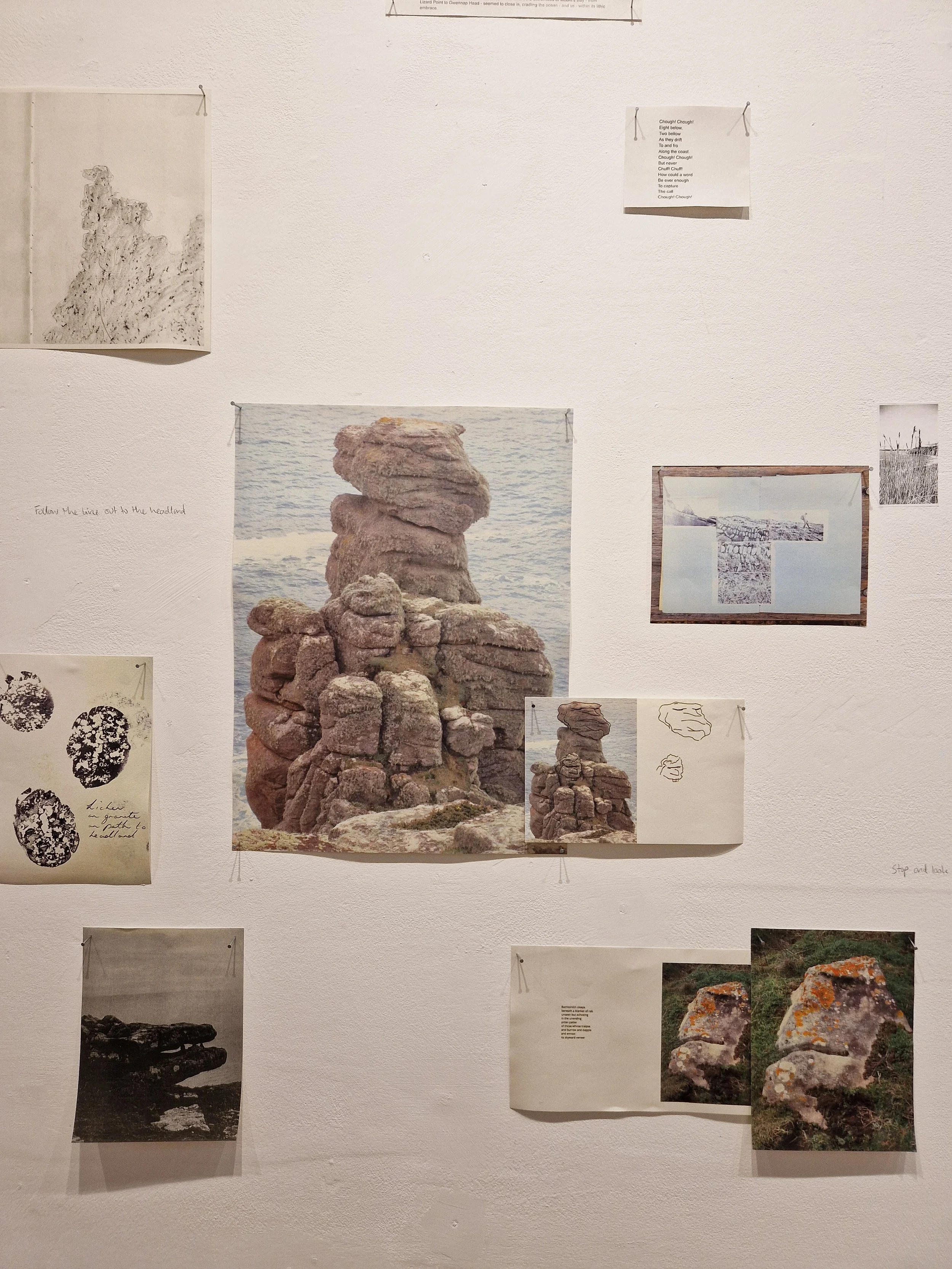
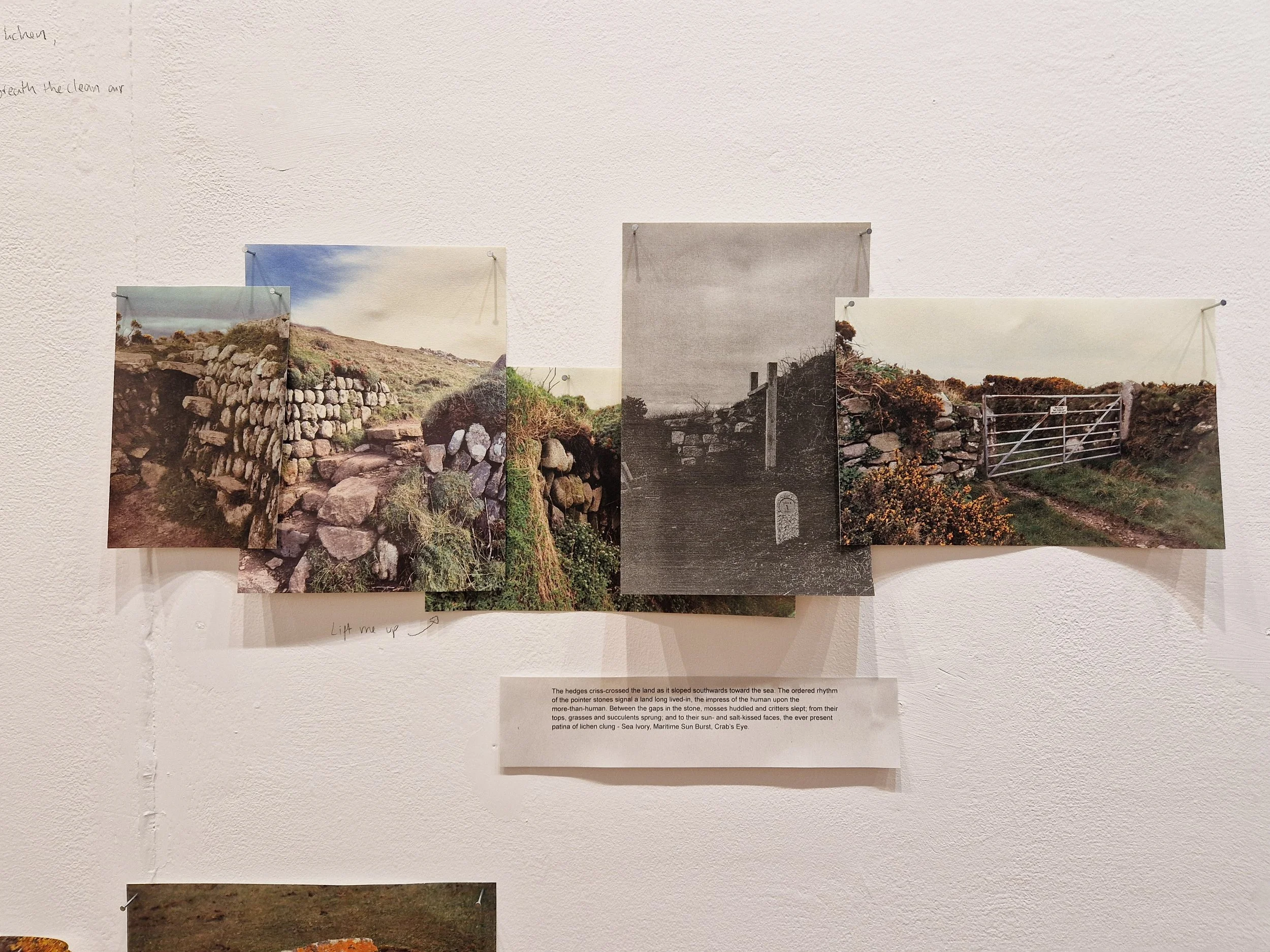
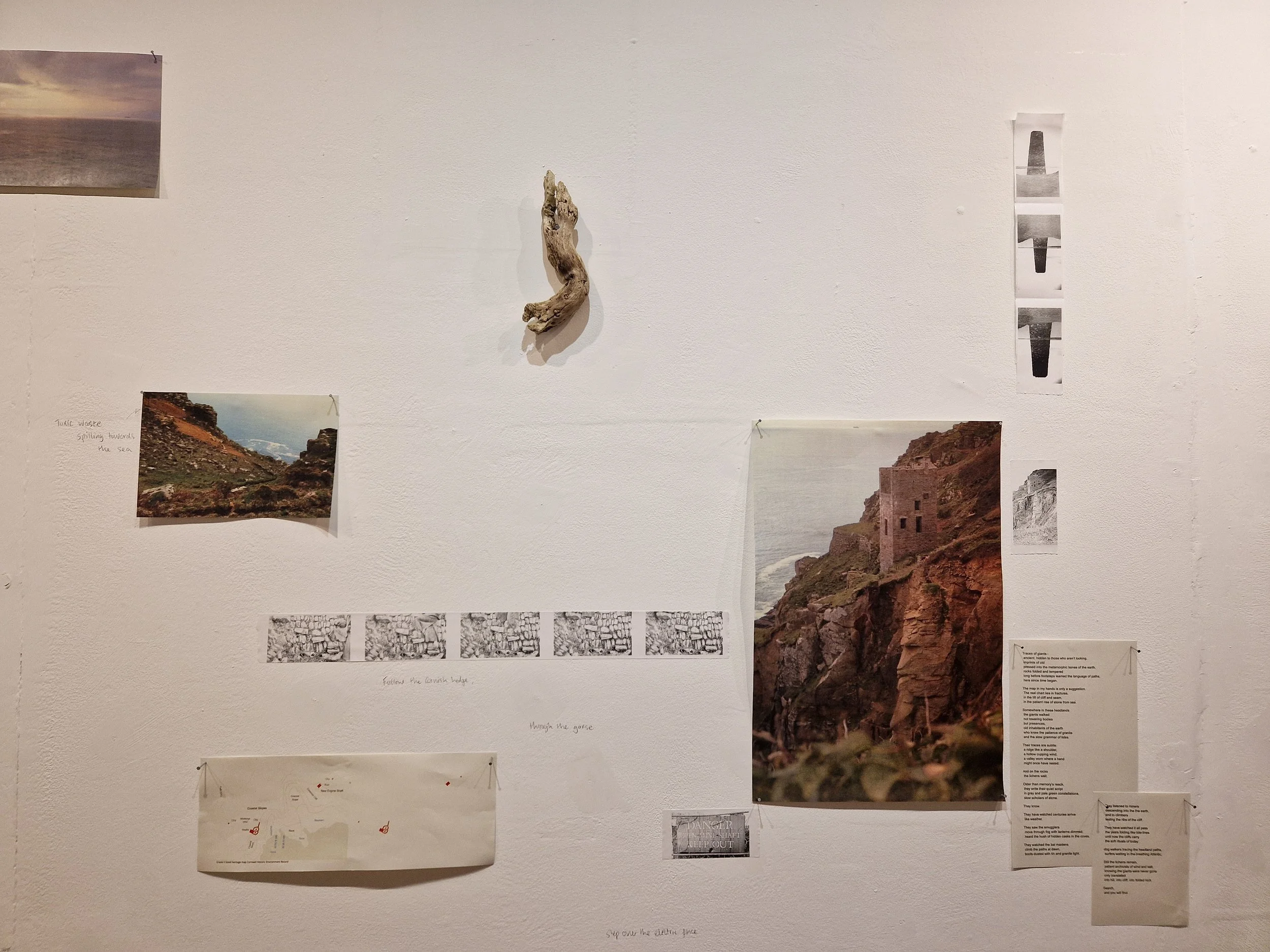
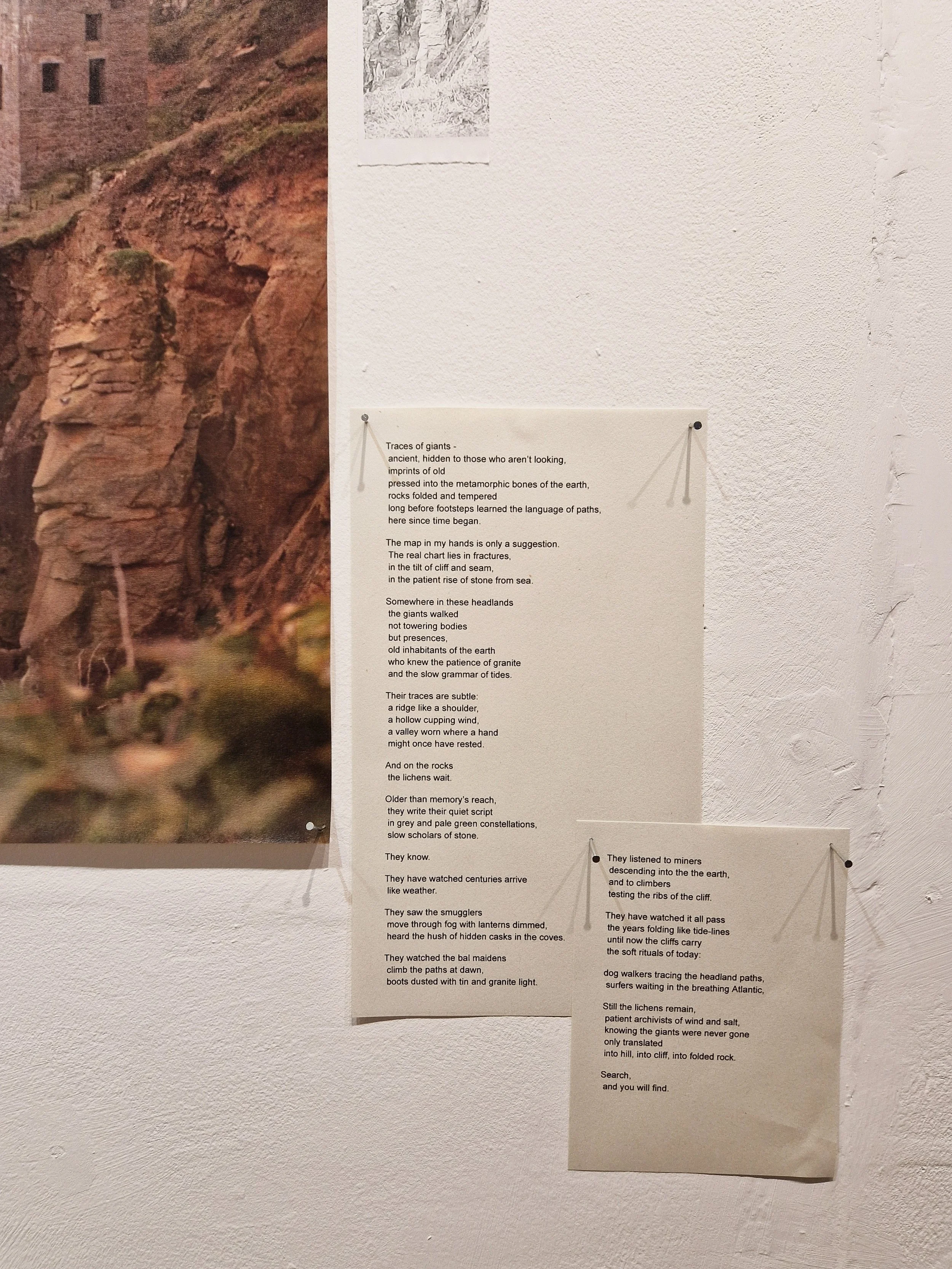
Landing was also exhibited at TONER, Penzance, in March 2026.
On one side of the gallery, I exhibited work from Malham, reusing prints from the work-in-progress exhibition. I then led a workshop in which a small group of artists created a response to Landing, through mapping out and studying a section of the Rinsey coastline, over the afternoon. This was then collectively exhibited the following day, on the opposite wall.
Participating artists: Stevi McNeill, Adrian Bregazzi, Benedict Furness, Amy Webb, Ella Markell and Matt Martin.
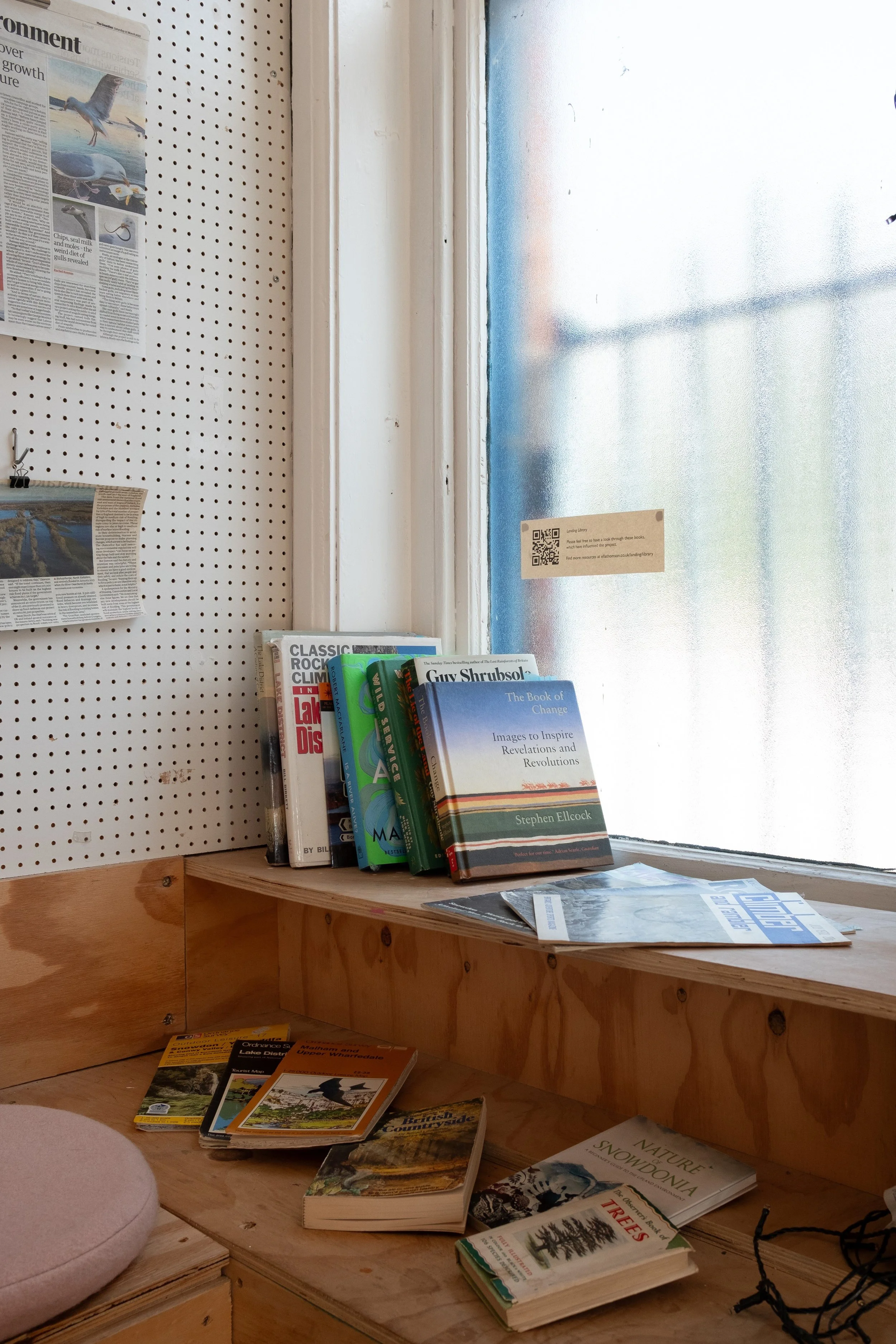
Landing Library
Below are links to the various online research sources, used for each zine.
After that, there are links to further resources, campaigns and organisations to learn more from.
Silverdale:
World Economic Forum - Fewer children than ever know the names for plants and animals
International Journal of Environmental Research and Public Health - Time Spent in Nature Is Associated with Increased Pro-Environmental Attitudes and Behaviors
We Are Nature campaign
Silverdale Village - Points of Interest Map
Scottish Geology Trust GeoGuide - Gait Barrows
Climate Central -Coastal Risk Screening Tool
Malham:
Natural England - Included outside: Engaging people from ethnic minority backgrounds in nature
Earth Trust - Nature everywhere, for everyone
Groundwork UK - Out of Bounds: Equity in Access to Urban Nature
British Science Association - Equality in access to natural spaces is essential for a more eco-friendly future
Katharine Holmes-artistwebsite
North Yorkshire Geodiversity Partnership
Malhamdale - local information and history
Yorkshire Dales National Park- Limestone pavements
Yorkshire Dales National Park - Malham Fact Sheet
Great Langdale:
Lee Schofield - Concerns about the Lake District World Heritage Site
The Guardian - Revealed: almost everyone in Europe is breathing toxic air
Journal of Sustainable Tourism -Changes to Climate and Visitor Behaviour: Implications for Vulnerable Landscapes in the North West Region of England
Landscape Research - Footpath management in the national parks
The Guardian - Drought declared in north-west England amid declining reservoir levels
Fields in Trust - Revaluing Parks and Green Spaces
British Ecological Society - More people enjoying the UK countryside is a good thing…isn’t it?
Lake District National Park Authority -Geology factsheet
GOV UK - The Countryside Code: advice for countryside visitors
Woodland Trust - Oak Trees and Wildlife
The Megalithic Portal - Copt Howe (Langdale Boulders)
The Guardian - How Lake District holiday homeowners are pushing out local residents
Chwarel Dinorwig:
BMC - A brief history of climbing in the Welsh slate quarries
UKClimbing - The Historical-Linguistic Arena of the Dinorwig Quarries
UKClimbing - Llanberis Slate - The Full Tour
The Guardian -Half of England is owned by less than 1% of the population
Right to Roam campaign
The Guardian - Wild camping on Dartmoor not a significant fire risk, research shows
GOV UK - National Drought Group meets after driest spring in 132 years
Wales Online - The UK's biggest battery is housed inside a beautiful Welsh mountain
Further Resources:
Read:
(A selection of books that have influenced this project)
A Field Guide to the British Countryside by Alfred Leutscher
England on Fire by Stephen Ellcock
Is a River Alive?by Robert Macfarlane
The Lie of the Land: Who Really Cares for the Countryside? by Guy Shrubsole
Making Sense of the Place Names of The Lake District by David Watson
Nature of Snowdoniaby Mike Raines
Practising Place:Creative and Critical Reflections on Placeeditied by Elaine Speight
The Walker’s Guide to Outdoor Clues and Signsby Tristan Gooley
Time on Rock by Anna Fleming
The Book of Change by Stephen Ellcock
The Future We Chooseby Christiana Figueres & Tom Rivett-Carnac
Underland by Robert Macfarlane
Weird Walk zine series
Wild Service: Why Nature Needs You editied by Nick Hayes and Jon Moses
Listen:
Black Earth - Black Earth Podcast
Buried - BBC Radio 4
Eco Chamber - Environmental Data Services
Finding Our Way: Diverse Outdoor Voices - BMC
Folk on Foot - Matthew Bannister
Naturebang - BBC Radio 4
PhotoFutures: Photography and Sustainability (round table discussion) - Impressions Gallery
Rare Earth - BBC Radio 4
The Long Time Academy - Headspace Studios, The Long Time Project, Scenery Studios
The Joy Report - Intersectional Environmentalist
The Nature Of - Atmos
Watch:
Adra | Pertex (53 mins)
Outdoors For All (subtitled) | BMC TV (5 mins)
The Lakes: Wild Once More | Wild Haweswater (11 mins)
The Landscape Project | Malham Cove and Gordale Scar| BMC TV (8 mins)
The Wanderlust Women | BMC TV (7 mins)
The Wood Wide Web - with Dan Snow| Friends of the Earth (2 mins)
Why are Dinorwic Slate Quarry's historical Welsh names so important?| Tudur Owen: What's in a name? (3 mins)
Visit + support:
Volunteer + act:
Friends of the Earth - Local groups, petitions and resources
Good to Grow - Community gardens
One Earth - Climate solutions at home
Right to Roam - local groups, rights and actions
Surfers Against Sewage - Campaign, clean and protect/monitor water quality
The British Mountaineering Council - Roles in your local area and conservation days
The Rivers Trust - Support your local group and river
The Wildlife Trusts - Help at home, citizen science, community hub and local opportunities
Trash Free Trails - Resources for trail cleaning and citizen science
Woodland Trust - Natures Calendar recording